Why you wake at 3 a.m. after 45
There is no single cause of waking at 3 a.m. after 45. Night sweats are one documented cause, and so are evening alcohol, caffeine taken hours before bed, and needing to urinate. [5][7][8][6] The practical job is working out which one fits your nights. In a large US survey, women were more likely than men to have trouble staying asleep, so you are not imagining it. [1]
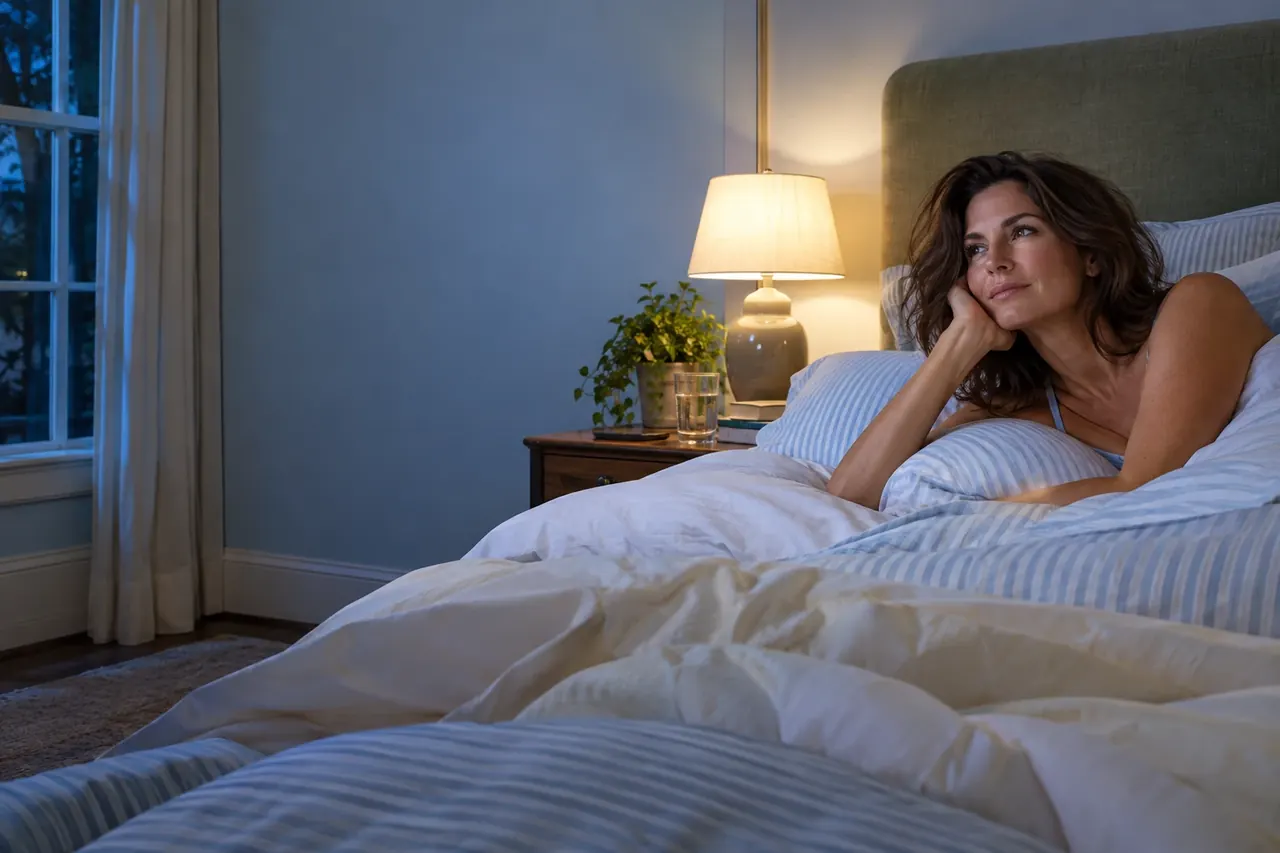
Why do women wake up more in the night after 45?
In the 2024 National Health Interview Survey, 21.4% of women said they had trouble staying asleep most days or every day in the past 30 days, compared with 14.6% of men. [1] That figure covers all adult women, not only those in midlife.
The Study of Women's Health Across the Nation (SWAN) followed 3,045 women who were 42 to 52 at the start. The odds of difficulty falling asleep and staying asleep rose as women moved through the menopausal transition, and more frequent hot flashes and night sweats were linked to higher odds of every sleep difficulty. [2] Early morning waking was different: its odds fell from late perimenopause to postmenopause. [2] The National Institute on Aging puts it simply: around midlife some women cannot fall asleep easily or wake too early, and if you wake in the night you may have trouble going back to sleep. [5]
Do night sweats wake you at 3 a.m.?
Sometimes, yes. In the SWAN sleep study, 314 women aged 48 to 58 were monitored for up to 27 nights. Those who reported nighttime hot flashes had more sleep-related movement and fragmentation, lower sleep efficiency, and were less likely to feel rested. [3] The authors' wording is measured: nocturnal hot flashes "can contribute" to restlessness and wakefulness. [3] That is one cause among several, not the whole story.
There is a twist. The National Institute on Aging says research now suggests that waking from sleep itself may trigger hot flashes, rather than the other way around. [4] So a drenched 3 a.m. does not always tell you which came first. If hot flashes are causing your sleep problems, the Office on Women's Health says to talk to your provider about treatment, which will usually improve your sleep. [6] Our article on hot flashes at night covers what the guidelines say.
Does evening alcohol cause 3 a.m. waking?
It can. A review of studies in healthy volunteers found that at all doses alcohol shortens the time it takes to fall asleep and gives a more consolidated first half of the night, but increases sleep disruption in the second half. [7] The nightcap feels like it helps, and the cost arrives hours later. The National Institute on Aging says alcohol will not help you sleep and that even small amounts make it harder to stay asleep, and the NHLBI advises avoiding alcoholic drinks before bed. [4][9]
Does afternoon caffeine cause 3 a.m. waking?
More than most people expect. In a home study, 400 mg of caffeine taken at bedtime, 3 hours before bed, or 6 hours before bed each caused significant sleep disturbance compared with placebo. [8] The authors concluded that caffeine taken 6 hours before bedtime has important disruptive effects. [8] The NHLBI notes that the effects of caffeine can last up to 8 hours, and that a cup of coffee in the late afternoon can make it hard to fall asleep. [9]
Can needing to urinate wake you up?
Yes. The Office on Women's Health says many menopausal women get urinary symptoms that make them get up several times during sleep, and that urinary problems after menopause are not a normal part of aging and can be treated. [6] The National Institute on Aging lists a need to urinate alongside night sweats as something that might wake you. [5] It also suggests avoiding large amounts of liquid late in the day. [11]
Does a consistent wake time help?
The CDC lists going to bed and getting up at the same time every day among its sleep tips. [10] The NHLBI adds that staying up late and sleeping in on weekends can disrupt your body clock, and suggests keeping the difference to no more than about an hour. [9] The same page recommends spending time outside every day when possible, and keeping the bedroom quiet, cool and dark. [9]
How do you tell which cause is yours?
Track it. The National Institute on Aging suggests keeping a sleep diary for a couple of weeks, noting when you go to bed, when you wake during the night, and when you wake for the day. [11] Then add the details the research points to and look for a pattern.
What to track for two weeks
Bedtime, the time you woke in the night, and the time you got up for the day. [11] Whether you woke hot or sweaty. [3] Any alcohol that evening, and the time of your last caffeine. [7][8] Whether you got up to urinate. [6] Bring the diary to your appointment; it shows your clinician a pattern instead of a feeling. [11]
When to talk to your clinician
The Office on Women's Health says to talk to your provider about sleep problems because it could be something serious, and notes that many women develop sleep apnea or insomnia. [6] If changes to your routine do not help as much as you would like, the National Institute on Aging suggests considering cognitive behavioral therapy for insomnia, which it says has been shown to improve sleep in women with menopausal symptoms. [4] Our article on asking for CBT-I explains how.
Sources
- CDC National Center for Health Statistics, Short Sleep Duration and Sleep Difficulties Among Adults: United States, 2024 (Data Brief 559). Last reviewed April 29, 2026. Retrieved 2026-10-18.
- Kravitz et al., Sleep disturbance during the menopausal transition in a multi-ethnic community sample of women (SWAN), Sleep 2008. PMID 18652093. Retrieved 2026-10-18.
- Kravitz et al., An actigraphy study of sleep and pain in midlife women: the SWAN Sleep Study, Menopause 2015. PMID 25706182. Retrieved 2026-10-18.
- National Institute on Aging, Sleep Problems and Menopause: What Can I Do? Content reviewed September 30, 2021. Retrieved 2026-10-18.
- National Institute on Aging, What Is Menopause? Content reviewed October 16, 2024. Retrieved 2026-10-18.
- Office on Women's Health, Menopause symptoms and relief. Page last updated May 30, 2025. Retrieved 2026-10-18.
- Ebrahim et al., Alcohol and sleep I: effects on normal sleep, Alcohol Clin Exp Res 2013. PMID 23347102. Retrieved 2026-10-18.
- Drake et al., Caffeine effects on sleep taken 0, 3, or 6 hours before going to bed, J Clin Sleep Med 2013. PMID 24235903. Retrieved 2026-10-18.
- National Heart, Lung, and Blood Institute, Healthy Sleep Habits. Last updated March 24, 2022. Retrieved 2026-10-18.
- CDC, About Sleep. Page dated May 15, 2024. Retrieved 2026-10-18.
- National Institute on Aging, Sleep and Older Adults. Content reviewed February 6, 2025. Retrieved 2026-10-18.
Every statement above was checked against the linked source on October 18, 2026. This article is education, not individual medical advice. Related: Signs of perimenopause, Hot flashes at night, the 7-Day Midlife Sleep Reset.